Our group's research includes (but is not limited to) both fundamental aspects and applications of chemistry and physics in health, energy, nanotechnology and green chemistry. Family antimatters is the name my research students coined for our group since some of our research are based on antimatters at particle accelerators.
We have three general areas of research interests:
Applications of physical chemistry tools to “other” disciplines. These studies are in collaboration with colleagues in “other” fields, including biology, medicine, commerce, and engineering..
Fundamental aspects of physical chemistry/chemical physics on topics such as novel types of chemical bonds, kinetic isotope effects on reactions of state selected molecules, developing new spectroscopic techniques to study intermediates, chemistry under extreme conditions, and the role of external fields on electronic structure in atoms, molecules and material as well as modeling chemical reactions.
Material science, energy transformation, and green chemistry.
For our medical research, so far we have been funded by NBIF. We have also been funded by NSERC, CFI and industrial grants for research concerning fundamental science, energy and environment, Green Chemistry, CO2 capture and its use in applications. Our investigations of Generation IV Energy Technologies has led to a successful collaborative research and development grant for years.
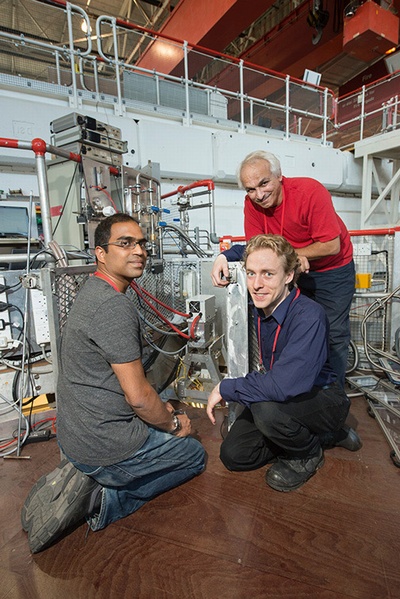
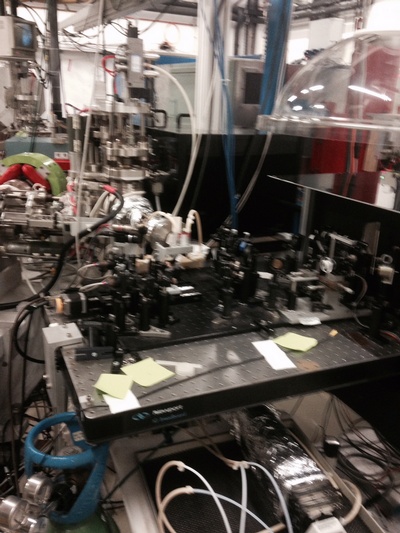
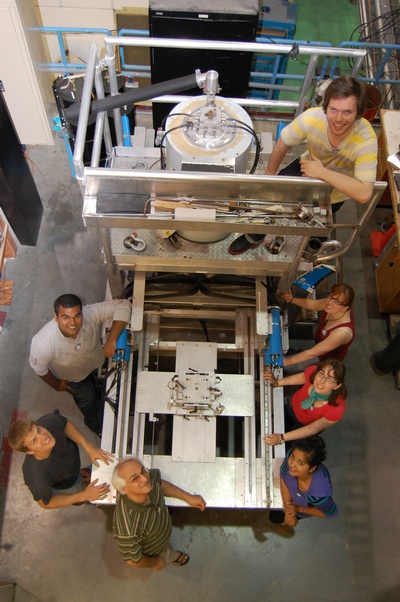
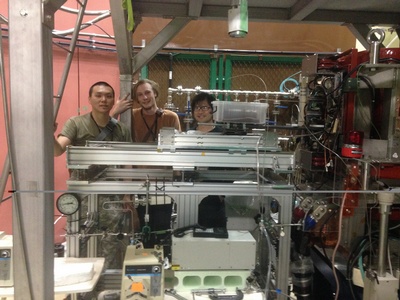
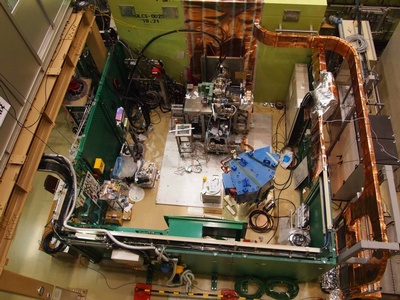
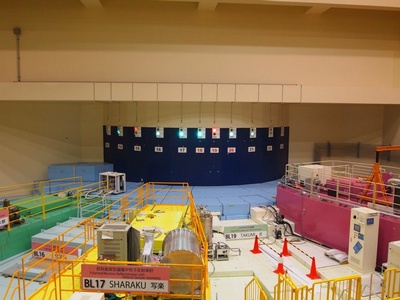
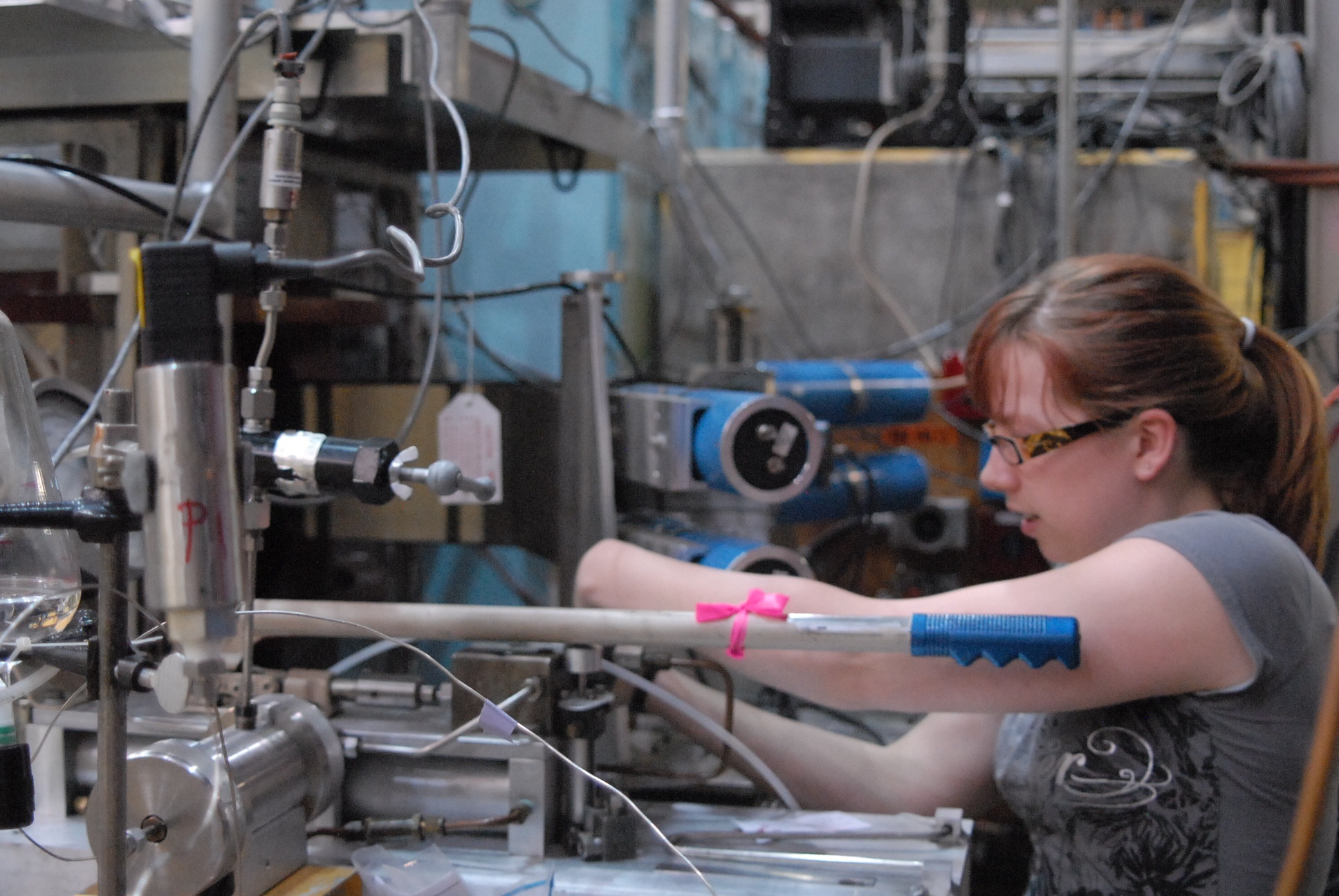
Our research is carried out both at a conventional chemistry laboratory which includes computational work such as investigating electronic structures, quantum field theory, Monte Carlo simulations, as well as hands on lab experiments in our department, instrument design (including design of medical devices), Spectroscopic studies, synthesis of novel material as well as data analysis. We obtain a large amount of data that need to be analyzed after each beam time (beam time is the time each year that we get to spend at particle accelerator facilities). Some of our research is also carried out at our lab in Guelph. For some of our work we must do experiments at international facilities in Canada, Europe, and Japan. Therefore, my group and I travel regularly to TRIUMF national laboratory in Vancouver, ISIS at the Rutherford Appleton Laboratory in the UK, ELYSE in university of Paris / Saclay and JPARC in Japan. In some of particle accelerators, we use the beams 24 hours per day, which means we need to take shifts (all of us including the supervisor) and work as a team to collect as much data as we can. Therefore, during our beam times, graduate students and I work all together shoulder-to-shoulder in the lab to help each student to do well. We could work on different projects for different students at different times but we all work for that particular student project (the student do most of the experiment design in consultation with the rest of group) at that time. This will give us a sense of team and family that is probably why my students called our group name family antimatters. We use high performance computing clusters for our calculations.
Students in our group will have publications in good journals and some will have patents as their publications. E.g., several of our antimicrobial compounds and materials and some of the medical devices that we developed using our fundamental research are patented. Our purely fundamental research is published in refereed publications but our applied research, if they have commercial value for industry, would be patented first before publication in peer-reviewed journals.